Get to know the CEO and visit the museum’s new Revolutionary War exhibit
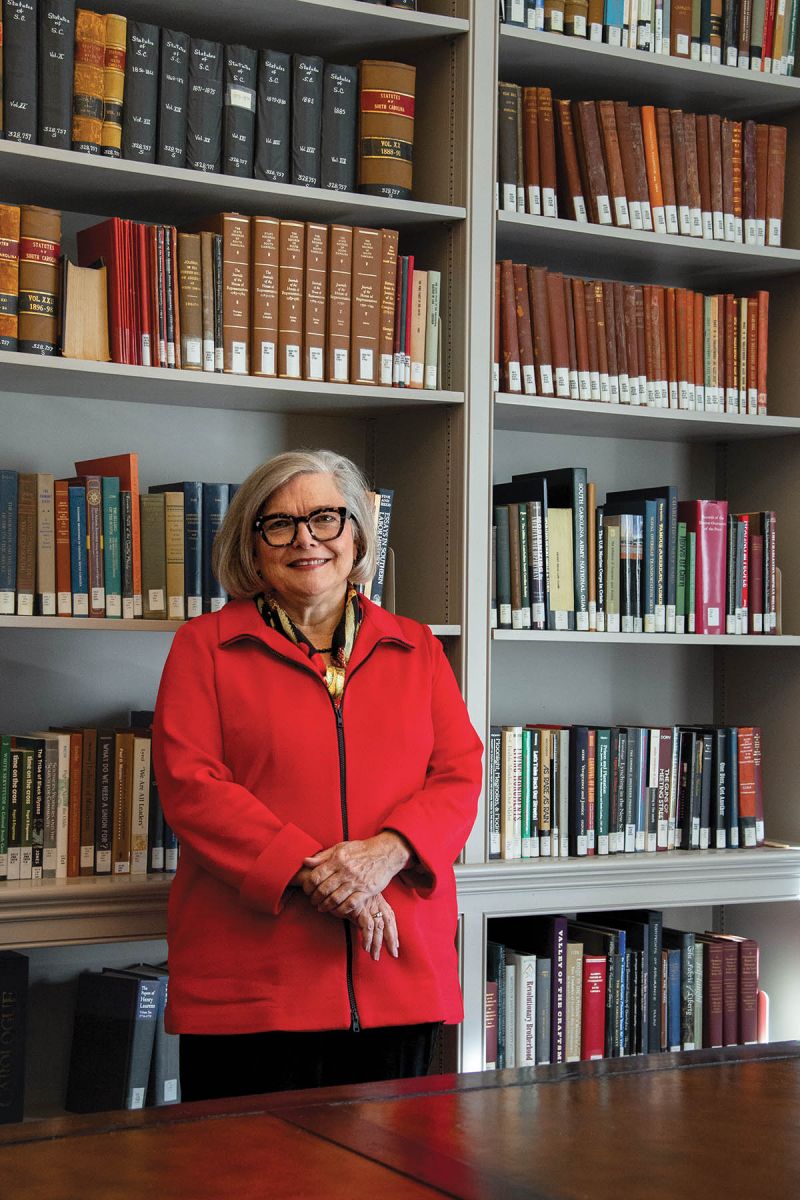
As chief executive officer of the South Carolina Historical Society, Elizabeth Chew gets to indulge her lifelong intrigue with the past and the Palmetto State. “I grew up in Augusta, Georgia, literally looking over across the river at South Carolina, which has always fascinated me,” she says. “For better or worse, the story of South Carolina is the story of our nation.”
With history degrees from Yale and the University of London, and a doctorate from UNC Chapel Hill, Chew’s got serious cred for overseeing the archive of 350 years of South Carolina history. The former chief curator at Montpelier (the home of James Madison) and lead curator at Monticello—“yep, me and all the presidents,” she laughs—is expanding programming at the Historical Society’s Fireproof Building and introducing more people to the organization’s expansive manuscript, rare book, and document collection, housed at College of Charleston’s Addlestone Library. To celebrate the nation’s 250th anniversary, Chew and her team have mounted an exhibit in the Fireproof Building on the Revolution in South Carolina and are organizing another to travel across the state.
CM: What was it about the SC Historical Society that led you to take this role?
EC: I’ve been visiting Charleston my entire life but have never lived here. When this position became available [in January 2024], I jumped at the opportunity to steward the rich history of a state that is so integral to our nation’s history, and I’m honored to now do that. It’s my personal mission, and our organization’s mission, to take the stories of South Carolina to people all over the state. The 250th is the perfect occasion to do that—the state’s role in the Revolution is so rich and important and so little understood, nationally and locally.
CM: Anything surprising you’ve discovered in your archives?
EC: I love women’s history and am absolutely mortified that prior to arriving here I did not know about Eliza Lucas Pinckney. Her father brought her here when she was a teenager and put her in charge of his plantation, where she figured out how to grow, process, package, and export indigo. She had an unusually complete education for a woman of her time. I’m just fascinated by her, and we’re proud to hold her letters and archives.
CM: What are your goals?
EC: My priority is raising the Historical Society’s profile—we’re still a little-known treasure, both an archive founded in 1855 and a museum. The museum in the Robert Mills-designed Fireproof Building is open to the public for only $1 admission. It’s a wonderful space with an engaging exhibition on the history of the entire state. We’re leaning into our ability to offer smaller, more intimate programs and to take those on the road.