
Glimpse gates and grilles that help create an enduring sense of place
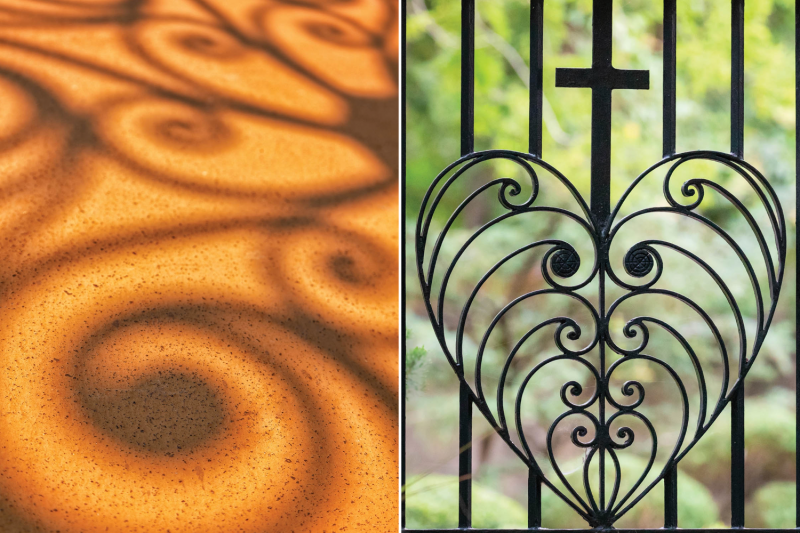
Through the lens of Doug Hickok‚
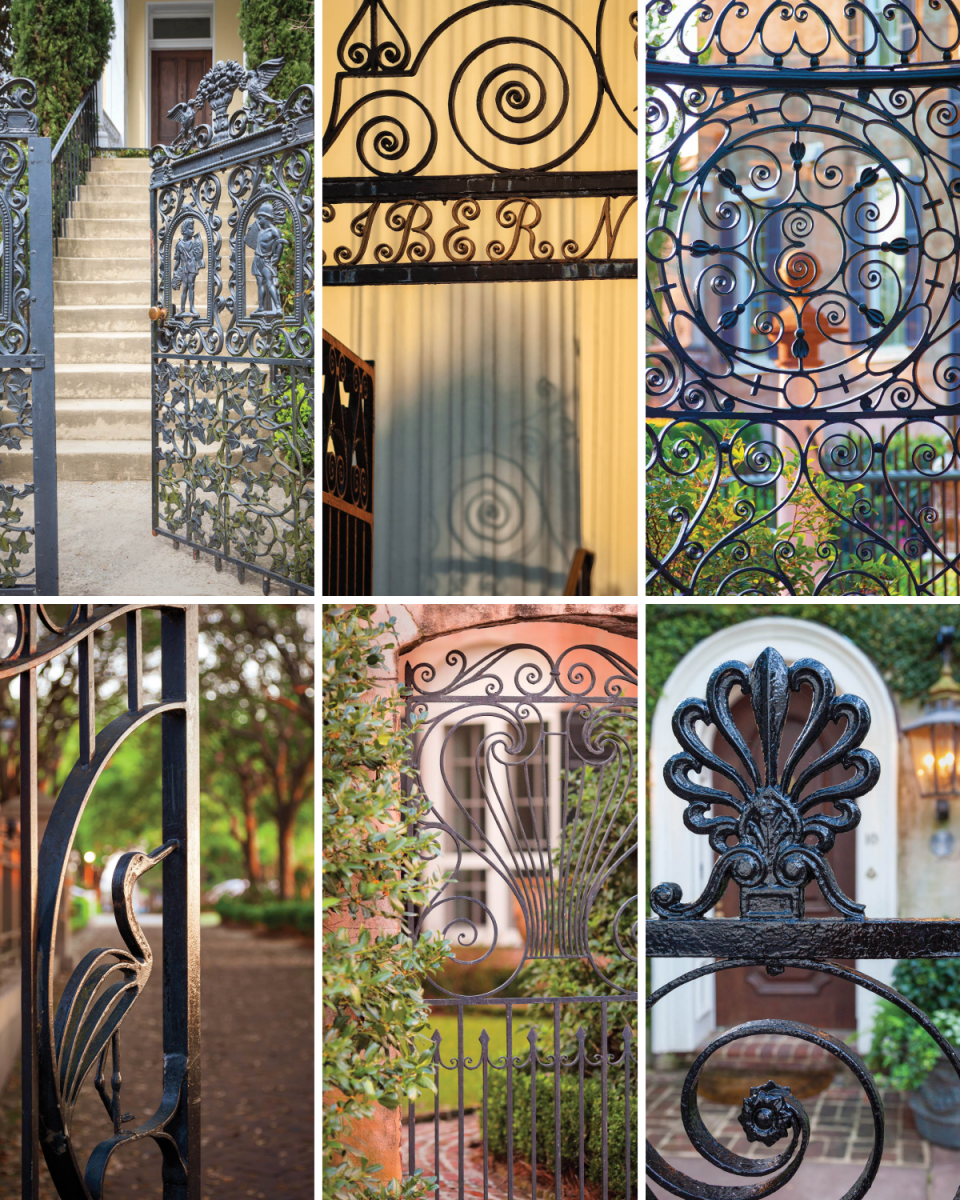
Charleston reveals itself in curves and shadows. For decades, the local photographer has captured the city’s ornamental ironworks—gates and grilles, balconies and balustrades—that trace centuries of craftsmanship and help create an enduring sense of place.
*Dates in parentheses note when the photograph was taken.
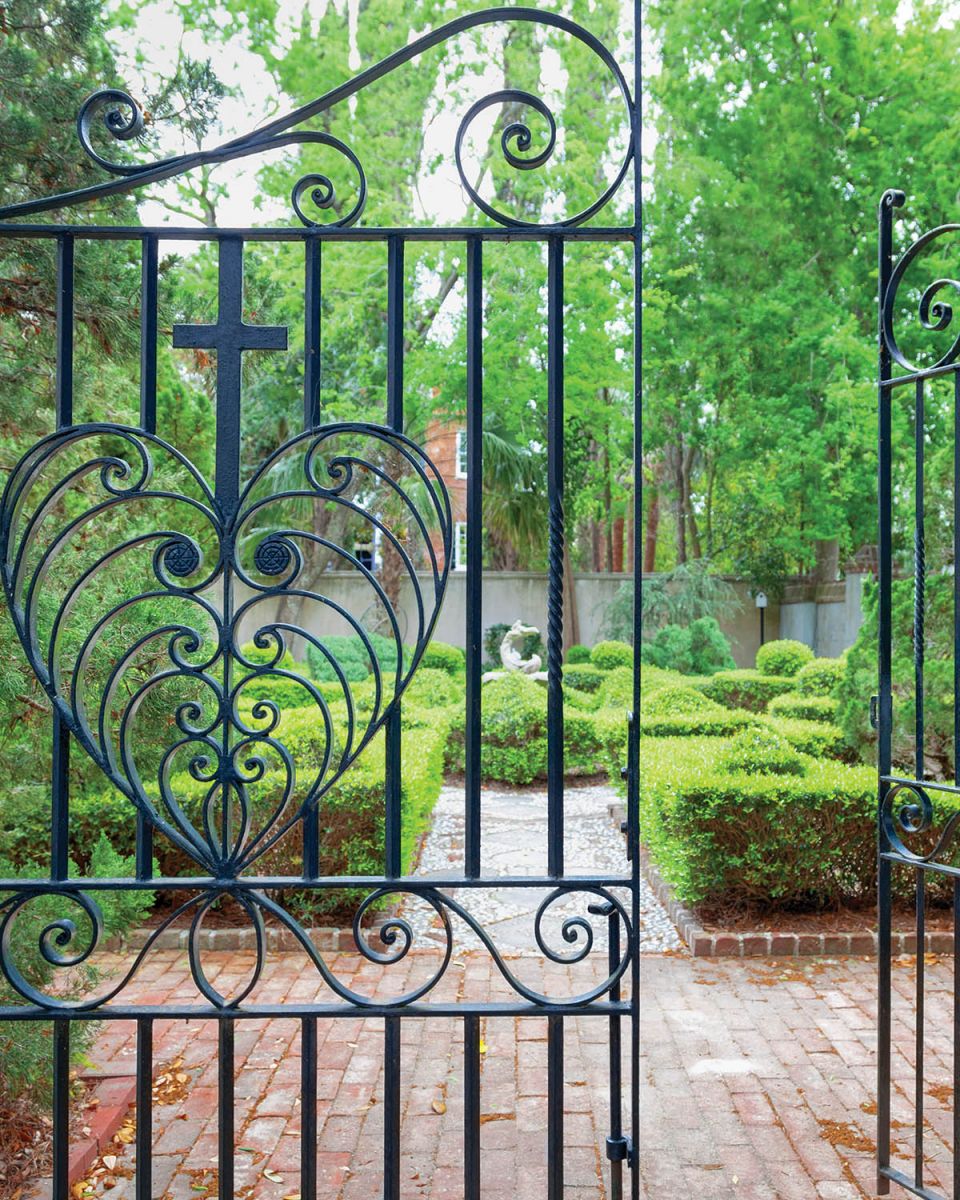
Renowned blacksmith Philip Simmons (1912-2009) designed the wrought-iron gates for the Philip Simmons Heart Garden on the grounds of the church, where he was a parishioner. Created as a permanent installation during the 1997 Spoleto Festival, it features topiary designs by South Carolinian Pearl Fryar. Enter on Menotti Street through the ”Double Heart” gates crafted by Simmons’s apprentices, his nephew Carlton Simmons and cousin Joseph Pringle.
Take a tour of celebrated blacksmith Philip Simmons’s ironwork:
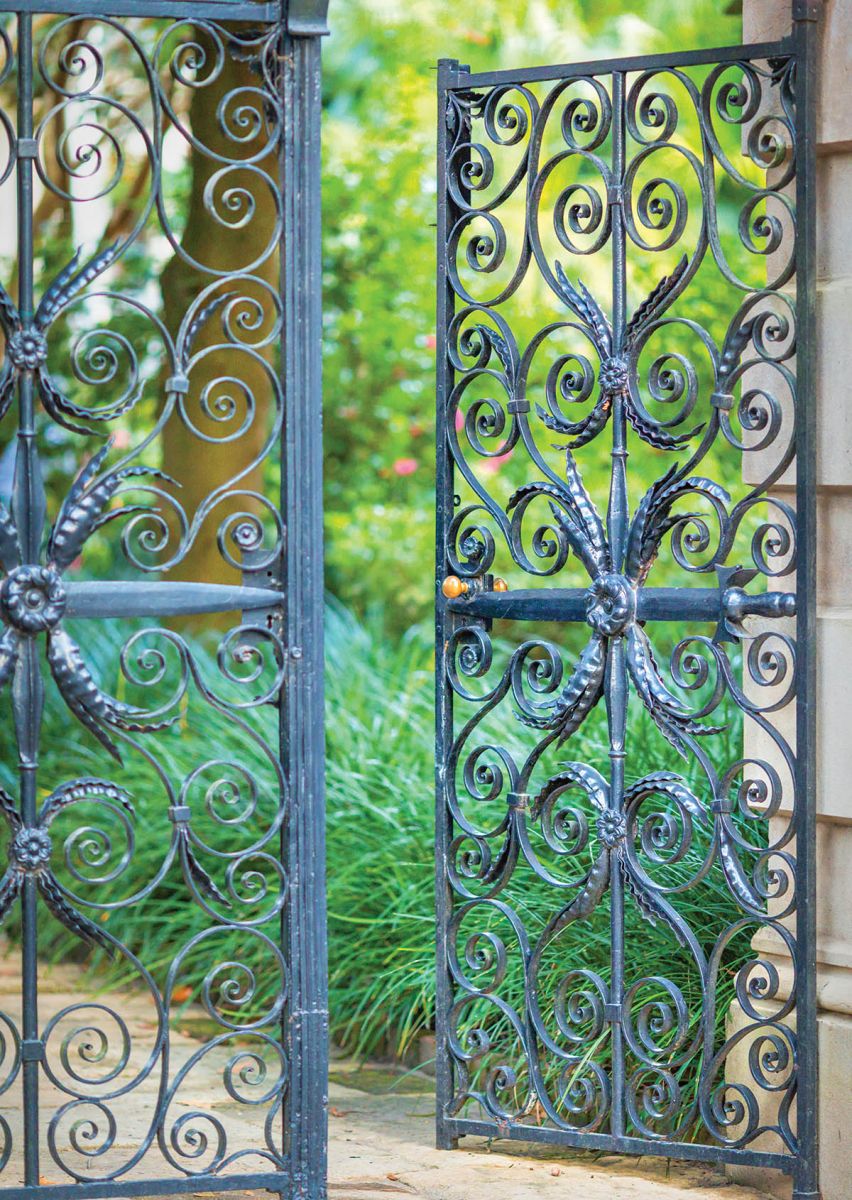
With an intricate design featuring swords and spears, the famed Sword Gates aren’t quite what you’d expect to see fronting a gracious mansion. Crafted by German-born artisan Christopher Werner (1805–1875) in the 1840s, the motif of strength and power was intended for a very different building: the city’s 1830s Guard House, long since demolished. Some accounts say that Werner’s gate was never actually installed at the Guard House, because the city refused to pay its high price. Another story is that, confused by the phrase “pair of gates,” Werner erroneously crafted two pairs—and the spare one went to Legare Street.
Get a closeup view of the Sword Gates and other 19th-century works by German-born artisan Christopher Werner:

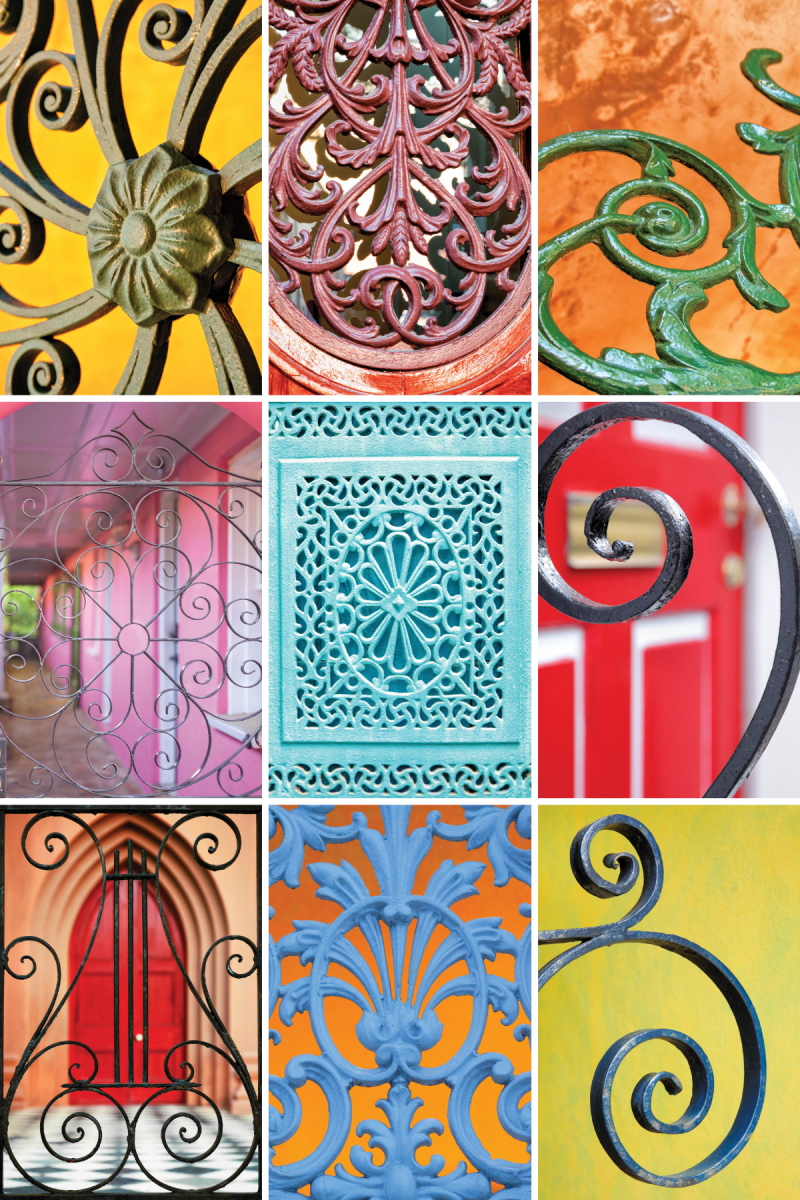
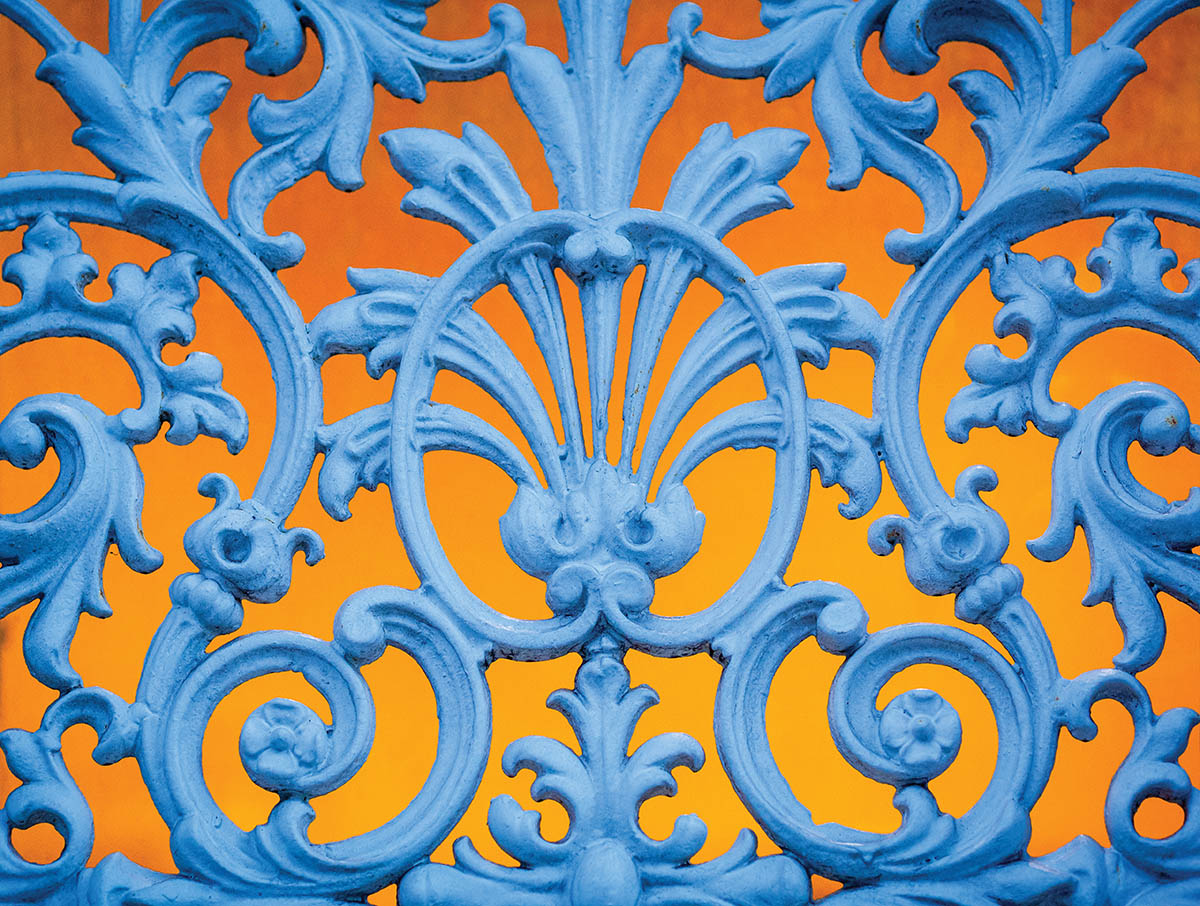
16 Broad Street (June 2018)
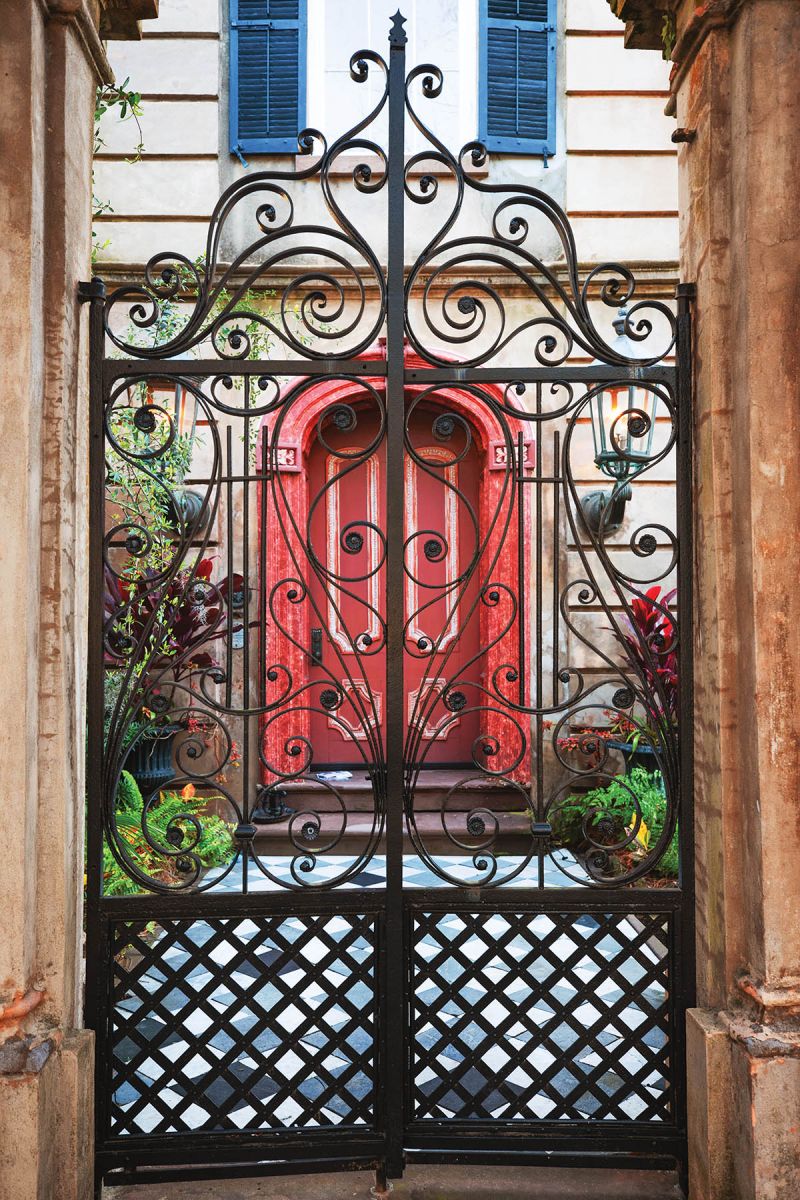
8 Legare Street, building constructed circa 1857 (February 2020)
Learn about the Philip Simmons’s Project, an effort to document his life’s work.