See the mentored exhibit the notable photographer helped curate at City Gallery at Waterfront Park from February to May
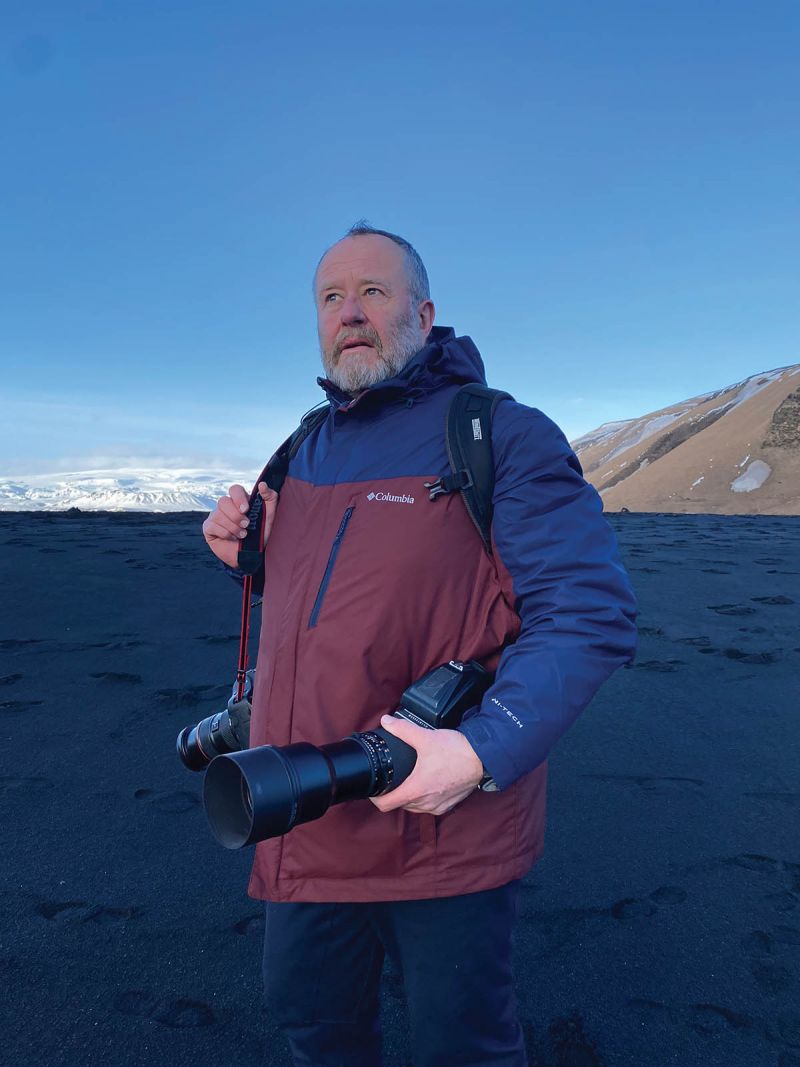


Nigel Parry’s photographs have shaped how we see some of the most recognizable faces of our time, from presidents Jimmy Carter and Donald Trump to actors Robert De Niro and Bill Murray. During his distinguished 30-plus year career, Parry’s portraits of cultural icons and world leaders have appeared in Vanity Fair, The New York Times Magazine, and Esquire and his work is held in the permanent collections of the National Portrait Galleries in both Washington, DC, and London.
Now based in Charleston with his wife, Spoleto development director Rachel Coker, Parry is curating “The Message is Clear: A Mentored Photography Exhibition” at City Gallery beginning this month. Running through May 2026, the show features works by up to 10 photographers whom Parry has mentored through the process. Here, the Englishman shares his approach to portraiture and his life in Charleston.
Getting Started: I fell in love with photography when I was about 14; I used to take landscapes in my spare time. I studied photography a little bit at college, but then I became a graphic designer. When I was about 27, graphic design grew lackluster because I was fed up with the number of compromises I had to make. I went to the head of the publishing company and showed him a bunch of photos I’d been taking, and he hooked me up with some people he knew. They thought he thought I was the next wunderkind, so they gave me a show basically overnight. I had to photograph 50 members of The Groucho Club [in London] in three months. I had nothing to lose and had everything to gain. And I gained everything.
Charleston Calling: The Groucho show launched my career in 1987, and I went full-time as a photographer in 1990. I shot to notoriety quickly. My rep was moving to New York, and he suggested it would be the next best place for me....I spent 30 years doing that. I first came to Charleston in 1995 to photograph a little old lady named Ruby, and I fell in love with the city right then. I bought a house in upstate New York in 2016, married my Southern belle bride at the end of 2019, and then in 2020, COVID hit. All my shoots for the year got canceled....I started missing the organization of elements within a camera viewfinder, so I pulled out my Hasselblad square cameras. There was no one around, so I went to local spots and started taking photos. The first ones are expressions of my loneliness....Then I’d go down to Charleston, and being surrounded by friends and my wife’s family, my photos got more approachable and hopeful and less icy.
Developing His Style: People used to view me as the “close and wrinkly” guy. I loved the proximity; you don’t normally get to be so close to people. But sometimes people took it as in-your-face. In truth, a portrait photo is a highly personalized view of the photographer and what they think about someone....The initial part of my process is chatting to them and finding the mannerisms I can reproduce when taking the photo. You really just have to lay your own soul bare, so they know they’re not dealing with someone who’s out to get them. It’s been tantamount to me that, even if I was sent to do a number on someone, or it was someone I didn’t like personally, I never lost their dignity.
A New Focus: Landscapes are all I do now; I’ve gone full circle. It was almost an overnight thing, which my life has been a series of great dynamic shifts. I still take portraits, but it’s not something I chase. I keep a camera in the car and remember views I want to get back to, even by bicycle if I can’t get it by car. It’s the same modus operandi as I use with portraiture. Before I lift the camera to my face, I ask what I am trying to say about this thing in front of me. If it’s not a famous person, does it tell what I’m trying to say? It’s the same with landscapes—am I capturing what I’m trying to say?